Legal Self-Help for Beginners
A Primer to Freedom
Using the First Amendment to disseminate crucial knowledge en masse
by Sondra Wilson. Updated July 21, 2025.
This page brings my casework, treatises to overturn Hans v. Louisiana (1890), and the justice reforms I am calling for, into context.
Iowa ranks among the ten least litigious (fewest lawsuits) states in the U.S. [1], which means many Iowans aren’t familiar with legal procedures or terminology. Legal language — often called “legalese” — is like a second language: it uses English words, but with precise, technical meanings that can be confusing without context. This page is here to fast-track your understanding of the law, so it doesn’t take you fifteen years like it did for me.
I’m not a Bar-certified attorney, but I’ve represented myself pro se (on my own behalf) and successfully defended myself in multiple criminal cases for which I truly was not guilty. Over the past fifteen years, I’ve studied the law rigorously and gained firsthand experience in both civil and criminal courts. If you are uncertain about the difference between criminal and civil law, start here. We’ll cover more about that topic soon. What you’ll read on this page and in the following articles draws from credible, often government-based sources, condensed for everyday understanding.
When ordinary Iowans take the time to understand the legal system and show up in court — including the cases I am involved with — it becomes much harder for judges to issue unjust rulings in silence. That’s exactly what happened during Wilson v. State of Iowa and Kim Reynolds for Iowa. Although a handful of people did show up for one of my appearances, most of them were unfamiliar with the law, and therefore did not understand what was being said. Thus, no one took notes, no one filmed the proceedings, and there were no articles written to explain to the public what had transpired. Consider, for a moment, if all of the people watching understood every legal term I cited, and knew the implications of what was being said. Because the public was not educated in the law, most of it went over their heads.
The purpose of this article is to orchestrate a groundswell grassroots movement of Citizens educated in the law, knowing how to file court documents, and creating our own media teams of self-organized Citizens educating people en masse about “how the courts operate, how to overturn unjust laws and overturn longstanding, oppressive case rulings, and ultimately, how to fix the system from the inside out.” Examples of how these sorts of things can be done include filing a Notice of Constitutional Question (Fed. R. Civ. P. 5.1), or challenging unjust local ordinances as arbitrary and capricious.
This page is a primer for a series of articles meant to prepare Iowans for the upcoming Wilson et al v. Trump et al case. I hope that, by the time I go to trial, hundreds will show up, cameras will be rolling, and legal arguments won’t just be understood by a handful of insiders. If a judge invokes an unjust law, I will challenge it under Fed. R. Civ. P. 5.1 Notice of Constitutional Question. If they rely on a harmful Supreme Court ruling, I’ll challenge that too, and we can petition to get it overturned. If it is just me and I am ignored, things will stay the same. If hundreds petition and know what is going on and why this case is so important, I assure you this case is going to be a homerun for all Iowans.
Thank you in advance for taking the time to engage with the information on this page. The cases I’m fighting — including a direct challenge to overturn Hans v. Louisiana (1890) — aim to help restore the American constitutional republic. Much of what today’s protestors are demanding can be achieved by learning how the legal system works — and using that knowledge strategically. For too long, this system has operated like a Frankenstein’s monster — out of control and unaccountable. But instead of just blaming the system, it’s time we learn how to grab the reins.
The following Nelson Mandela quote exemplifies why it has become my duty to impart this knowledge to as many people as possible:
Above image from ScrollDroll is utilized for First Amendment purposes in accordance with the U.S. Copyright Office’s Fair Use Policy and the Fair Use Doctrine [2].
I. Background: Why I began studying law
I began compiling and organizing thousands of legal term definitions onto www.ReUniteTheStates.org using credible law dictionaries recommended on “pro se” self-help websites found on U.S. and state court websites, such as the U.S. Court of Federal Claims’ pro se section [3] following:Â
1.) A series of injustices I faced, many of which were color of law crimes. In essence, a color of law crime occurs when a government official or employee uses the “color” (appearance) of law in order to deprive a person of their rights, such as a provision of Iowa Code, a statute, a city ordinance, custom, policy, or regulation. One example of a federal law which specifies that doing this is, in fact, a crime, is 18 USC §242 Deprivation of rights under color of law – “Whoever, under color of any law, statute, ordinance, regulation, or custom, willfully subjects any person in any State, Territory, Commonwealth, Possession, or District (or county, city, etc. – seeimplied law) to the deprivation of any rights, privileges, or immunities secured or protected by the Constitution or laws of the United States, or to different punishments, pains, or penalties, on account of such person being an alien, or by reason of his color, or race, than are prescribed for the punishment of citizens, shall be fined under this title or imprisoned not more than one year, or both….” [4] 18 USC § 3559(a)(7) sets forth that this is a Class D misdemeanor; [5]
2.) Learning firsthand from SJSU Professor Emeritus Frank Schiavo (1939-2010), including stories on how he personally fought to overturn multiple “arbitrary and capricious” city ordinances. If the City of San Jose continued to deprive Frank of painting his roof white based on their arbitrary and capricious local ordinance, he could have sued the city for depriving him of his right. The city saw the liability they faced if they had chosen to enforce their unjust ordinance on him (because he could have sued), and thus they backed down from enforcing it.
3.) Reading the following passages from The UCC Connection: Free Yourself from Legal Tyranny by Howard Freeman [6], which set me on a path toward learning everything I could about the law.
II. Unpacking The UCC Connection
Here I have transcribed excerpts from The UCC Connection, then supplemented each section with additional research to back Mr. Freeman’s writings.
Preface: Using this Knowledge for the Right Reasons
Although Freeman writes about studying the law to avoid paying taxes, I find this to be an unwise, self-serving, and negligent use of this information. After all, taxes help pay for schools, roads, bridges, SNAP and healthcare benefits for the downtrodden (social safety nets), the post office, veterans benefits, and other important government functions. Before we move on, this seems like a good time to play this famous scene from Monty Python, “What Have the Romans Ever Done for Us?”:
Due to tax evasion, some cities throughout the country are now facing privatization of public libraries [7], allowing corporations to control what types of knowledge the public does and doesn’t have access to. Additionally, prisons are becoming privatized, leading to more inmates and longer sentences. [8] Private interests led to 180,000 now being kicked off MediCaid. [9] The point being, there is a balance to be struck between the private and public sector because where commodities become overly-privatized, people on the lower rungs of society tend to suffer. This has to do with Dodge v. Ford Motor Co., 204 Mich. 459, 170 N.W. 668, 3 A.L.R. 413 (Mich. 1919). This case arose from the Dodge Brothers suing Henry Ford, who was passing all the savings on to customers, which drove down incentive for employees to work. The Dodge Brothers won their case, and the U.S. Supreme Court ruled that, “The purpose of a corporation is to make a profit for the shareholders, but a court will not interfere with decisions that come under the business judgment of directors.” [10]
Reality Check: Most Americans Can’t Afford an Attorney, and Legal Aid Organizations can’t help with most types of cases
First excerpt from The UCC Connection: Free Yourself from Legal Tyranny:
“The frustration many Americans feel about our judicial system can be overwhelming and often frightening and, as most fear, is based on lack of understanding or knowledge. Those of us who have chosen a path out of bondage and into liberty are faced, eventually, with the seemingly tyrannical power of some governmental agency and the mystifying and awesome power of the courts. We have been taught that we must ‘get a good lawyer,’ but that is becoming increasingly difficult, if not impossible. If we are defending ourselves from the government, we find that the lawyers quickly take our money and then tell us, as the ship is sinking, ‘I can’t help you with that — I’m an officer of the court.'”[6]
According to Black’s Law Dictionary (10th Edition), an officer of the court is, “Someone who is charged with upholding the law and administering the judicial system. Typically, officer of the court refers to a judge, clerk. bailiff, sheriff, or the like, but the term also applies to a lawyer, who is obliged to obey court rules and who owes a duty of candor to the court. — aka court officer. [11]
According to Ballantine’s Law Dictionary Legal Asst. Ed., “Anyone who is an employee of the court (EXAMPLES: a judge; a bailiff; a marshal; a clerk) or a person who, although not an employee of the court, is obligated to conduct himself in a manner that furthers the administration of justice (EXAMPLE: any attorney admitted to practice before the court).” [12]
According to the American Bar Association, lawyers are officers of the court. Their job is to represent their clients zealously, within the formal rules of the Code of Professional Conduct. The belief is that justice can best be achieved if each side’s case is vigorously presented by competent legal counsel. [13]
Although this sounds lovely, 92% of low-income U.S. Citizens are unable to find legal assistance for civil matters. [14] Here in Iowa, the average Citizen earns $18.63/hr., while the average rate for a civil litigation lawyer in Iowa is $254/hr. [15]Â
Therefore, many Iowans are directed to seek help from Iowa Legal Aid, Drake University Legal Clinic, Legal Aid of Story County, and similar organizations. None of them, however may assist with “fee-generating cases”. This means that they can generally only help with divorce/custody and tenant/landlord issues. Any Iowan who has suffered a severe injustice knows the frustration: you try to find an attorney to help, find out they cost too much, so instead you go to these free legal aid orgs for help. After telling you they can’t help, they direct you to find a private attorney on the State Bar website. When you’re severely suffering and experiencing great loss, the lack of support in this state can be maddening.
With approximately 372 rules of procedure for civil cases (Iowa Rules of Civil Procedure + Iowa Rules of Evidence) and entire separate language comprised of English words, but with a separate set of meanings (“legalese”), this leaves a many Iowans unable to find, afford, or figure out how to obtain justice, and prone to fraud, abuse, and rights violations by those who do.
Not to get all Biblical on you, but the denial of “knowledge of the law” to the common people has been going on for a very long time. According to Luke 11:52 (NIV), Jesus said, “Woe to you experts in the law, because you have taken away the key to knowledge. You yourselves have not entered (the Kingdom of Heaven on Earth), and you have hindered those who were entering.” 53 (KJV): As Jesus was leaving, the teachers of religious law and the Pharisees became hostile and tried to provoke him with many questions. And as He said these things to them, the scribes and the Pharisees began to assail Him vehemently, and to cross-examine Him about many things. 54 (NLT): They wanted to trap him into saying something they could use against him. [16]
Empower Yourself! Learn the “RULES OF THE GAME”
The UCC Connection: Free Yourself from Legal Tyranny continued:
“Ultimately, the only way for us to have even a ‘snowball’s chance’ is to understand the RULES OF THE GAME and to come to an understanding of the true nature of the Law. ” [6]
Here, Freeman refers to the “rules of the game”. Where do we find such rules? Upon further looking into this, I found that nearly every courthouse website has a “pro se” or “self-help” section. The term “pro se” is an abbreviated form of the Latin termpropria persona, which translates “on behalf of themselves.” To advocate “pro se” means to advocate on one’s own behalf before a court rather than being represented by a lawyer, which may be done while acting as the plaintiff or defendant in a civil case, or as a defendant in a criminal case. [17] Here are some examples of pro se sections from various courts across the country:
Northern District of California: https://cand.uscourts.gov/pro-se-handbook/
District of North Dakota: www.ndd.uscourts.gov/lci/pro_se.pdf
Iowa Judicial Branch: www.iowacourts.gov/For_the_Public/Representing_Yourself_in_Court/How_to_Represent_Yourself/
U.S. Court of Federal Claims:www.uscfc.uscourts.gov/pro-se-information
Although some of the above links are far more informative than others, nearly all of them recommend Black’s Law Dictionary as a credible source. The U.S. Court of Federal Claims website, and several other courthouse websites, also mention Ballantine’s Law Dictionary. If you have not seen a law dictionary, there are far, far more words than you will find in a regular dictionary:
In additional to the language of legalese, there are approximately 372 rules of procedure for civil cases (I call it “a crossword puzzle from Hell”), leaving a lot of Iowans unable to find, afford, or figure out how to obtain justice, and thus prone to fraud, abuse, and rights violations. This is why, besides building the above website, I’ve been organizing these complex rules into step-by-step instructions. They are divided into “pre-trial”, “during trial”, and “post trial” rules. Although unfinished, this is how I have been able to keep up with my cases:
It isn’t as difficult as you might think
The UCC Connection: Free Yourself from Legal Tyranny continued:
“The lawyers have established and secured a virtual monopoly over this area of human knowledge by implying that the subject is just too difficult for the average person to understand, and by creating a separate vocabulary out of English words of otherwise common usage. While it may, at times, seem hopelessly complicated, it is not that difficult to grasp. Are lawyers really as smart as they would have us believe? Besides, anyone who has been through a legal battle against the government with the aid of a lawyer has come to realize that lawyers learn about procedure, not about law… Consider also that the framers of the Constitution wrote in language simple enough that the people could understand, specifically so that it would not have to be interpreted. So, again we find, as in many other areas of life, that “THE BUCK STOPS HERE!” It is we who must take the responsibility for finding and putting to good use the TRUTH. It is we who must claim and defend our God-given rights and our freedom from those who would take them from us. It is we who must protect ourselves, our families and our posterity from the inevitable intrusion into our lives by those who live parasitically off the labor, skill and talents of others.“
III. We Live in a Democratic Republic
Constitutionally speaking, we are in fact a Democratic-Republic: we do not live in one or the other. The following 11 minute video shows the difference between a Republican form of government, and a Democracy. Although the video focuses more on the Republican form of government, and insists that the we live in a strict Republic, again we are a combination of the two. Regardless, it does an excellent job of breaking down what exactly this means:
IV. To be continued: how to help!
More will be added to this page at a later time. For now, I must tend to other parts of the website. If you learned something from this page, and want to see more, please consider helping in any of the following ways, and thank you for your support!
Donate
Support Wild Willpower’s Online Store
Support Our Sponsors
Join Me On Social Media
Follow my Facebook, Instagram, BlueSky, X (formerly Twitter), and LinkedIn accounts— See a post you like? Please share it with a few words of why you believe in it, write #Sondra4Governor and #WildWillpower to help spread the word faster. This is a grassroots campaign: if every Iowan who wants a better future is posting this, they can’t ignore us! Please help my campaign bust through and get noticed.
Print This Handout
Print and hand out this PDF — Hand these out to anyone, or set a stack on your business counter for customers.
References
The image of the designer Iowa flag slogan, from Vexilla Mvndi, is used in accordance with the Fair Use Doctrine. Link to image: https://www.vexilla-mundi.com/usa_states/iowa_flag.html.
[1]: Iowa ranked one of the least litigious states in the union:
U.S. Chamber Institute for Legal Reform. (2019). 2019 lawsuit climate survey: Ranking the states – A survey of the fairness and reasonableness of state liability systems. U.S. Chamber of Commerce.
https://instituteforlegalreform.com/wp-content/uploads/2020/10/2019_Lawsuit_Climate_Survey_-_Ranking_the_States.pdf.
Laffer, A. B., Moore, S., & Williams, J. (2025). Rich states, poor states: ALEC-Laffer state economic competitiveness index (2025 ed.). American Legislative Exchange Council.
https://www.richstatespoorstates.org/variables/state_liability_system_survey/.
Moreland, T. A. (2020). Tort reform in Iowa: Why a cap on noneconomic damages is the right policy at the right time. The Journal of Corporation Law, 45(4), 889–918.
https://jcl.law.uiowa.edu/sites/jcl.law.uiowa.edu/files/2025-03/Moreland_Final%20%281%29.pdf.
[6]: Freeman, Howard. (Sept. 22, 1991). The UCC Connection: Free Yourself from Legal Tyranny. https://www.supremelaw.org/authors/freeman/freeman5.htm.
[7]: Whitaker, Jonathan. (Mar 19, 2025). Outrage erupts as word spreads Merced County is mulling library privatization. Merced County Times. https://mercedcountytimes.com/outrage-erupts-as-word-spreads-merced-county-is-mulling-library-privatization/.
[8]: Washington State University. (Sept. 15, 2020). Privatized prisons lead to more inmates, longer sentences, study finds. https://news.wsu.edu/press-release/2020/09/15/privatized-prisons-lead-inmates-longer-sentences-study-finds/.
[9]: Cale, Jackie. (June 6, 2025). Governor Reynolds Signs Medicaid Cuts, Disastrous for 180,000 Iowans. American Cancer Society Action Network. https://www.fightcancer.org/releases/governor-reynolds-signs-medicaid-cuts-disastrous-180000-iowans.
[10]: Dodge v. Ford Motor Co. (retrieved July 20, 2025). Casebriefs. https://www.casebriefs.com/blog/law/corporations/corporations-keyed-to-klein/the-nature-of-the-corporation/dodge-v-ford-motor-co/.
[11]: Black, Henry Campbell and Garner, Bryan A. Black’s Law Dictionary Deluxe Tenth Edition. ISBN: 978-0-314-61300-4
[12]: Ballantine, James “Jack Anther and Handler, Jack G., J.D. (1994). Ballantine’s Law Dictionary Legal Assistant Edition. Delmar by Thomson Learning. ISBN 0-8273-4874-6.
[13]: American BAR Association, “How Courts Work > Officers of the Court”: https://www.americanbar.org/groups/public_education/resources/law_related_education_network/how_courts_work/court_officers.html
[14]: Legal Services Corporation. (retrieved July 20, 2025). The Justice Gap: The Unmet Civil Legal Needs of Low-income Americans. https://justicegap.lsc.gov/.
[15]: Clio. (retrieved July 20, 2025). How much should I charge as a lawyer in Iowa? https://www.clio.com/resources/legal-trends/compare-lawyer-rates/ia/.
[16]: Bible Hub. (retrieved July 20, 2025). https://biblehub.com/luke/12-11.htm.
[17]: Madelynn Herman, Madelynn. (September 25, 2006). Self-Representation: Pro Se Statistics. National Center for State Courts. https://web.archive.org/web/20120504035215/http://www.ncsconline.org/wc/publications/memos/prosestatsmemo.htm.
From Protesting to Case Building
The Next Phase of Grassroots Political Organizing has Begun
Be Part of the Movement Turning Outrage into Legal Action
By Sondra Wilson. Updated July 12, 2025.
As an in-the-making new type of NPPO (non-party political organization), Wild Willpower is taking on a different approach to helping to initiate political change. By observing and analyzing political protest movements for years, we can see what worked, what didn’t work, and how movements over the years have gotten undermined, infiltrated, mismanaged, and fall apart.Â
U.S. Citizens used to get together and build lawsuits, and it worked
Occasionally throughout U.S. history, ordinary Citizens used to come together, compile evidence, and build lawsuits that set powerful precedents and held persons in high positions of authority accountable, and we can do it again. Here are two examples:
-
Woodruff v. North Bloomfield Gravel Mining Co., 18 F. 753 (C.C.D. Cal. 1884): A group of Stockton-area farmers sued the North Bloomfield Mining Company after heavy hydraulic mining destroyed crops and flooded farmlands. In a landmark decision, Judge Lorenzo Sawyer ruled in their favor, banning destructive mining practices and establishing early environmental law in California Law Resource+5Wikipedia+5National Archives+5.
-
 Anderson v. Pacific Gas & Electric Co., 14 Cal.App.4th 254 (Cal. App. 1993): A single mother and legal assistant helped build a major groundwater poisoning case against Pacific Gas & Electric. The result? A historic $295 million settlement for affected residents Natural Gas Intel.
These cases show that grassroots legal action works—and now we need similar citizen-driven strategies in modern movements.
🔍 Why Action Must Evolve Beyond Protests
Protests are vital—but alone, they don’t shift broken systems. We’re bleeding our own funds on signs and rallies that draw headlines but don’t stop injustices. Instead, we should:
-
Build well‑structured cases supported by clear legal frameworks,
-
Educate the public about existing laws violated by abusive institutions,
-
Fund these efforts so they can reach courts and compel real change.
Sondra Wilson is doing just that with Operation: Magna Carta II. She’s publishing statutes, legal definitions, court filings, and context—empowering people to understand the law and participate alongside attorneys .
🏛️ ICE as a Case Study: What Citizens Can Change
Today, ICE’s budget has exploded—with a markup such as the “Big Beautiful Bill” allocating $170 billion across detention and enforcement, making it even larger than the FBI and DEA combined americanimmigrationcouncil.org+11theguardian.com+11thedailybeast.com+11. Yet the agency:
-
🚨 Holds people in cruel conditions,
-
🚨 Deports individuals to the wrong countries,
-
🚨 Violates due process, and shows no transparency.
The courts have the power to:
-
📉 Slash ICE funding,
-
🛡 Force compliance with legal and constitutional standards,
-
🔓 Demand transparency and oversight.
But none of that happens unless citizens fund the legal groundwork.
🔨 What Wild Willpower Will Do—and Why It Matters
-
We will fund grassroots legal initiatives—like Operation: Magna Carta II—to hold ICE and similar agencies accountable.
-
Our website will publish statutes, legal definitions, and court filings so anyone can follow—or even join—the cases.
-
We’ll show exactly where your contribution goes, from expert witness fees to filing costs, so you can see your impact.
This is Wild Willpower’s promise: to move from anger to action; from protest to power; from slogans to statutes. When citizens build cases together, we don’t just make noise—we make law.
Ballantine, James “Jack” Arthur and  Anderson, William S. (1969). Ballantine’s Law Dictionary with Pronunciations.
Third Edition. THE LAWYER’S CO-OPERATIVE PUBLISHING COMPANY. Library of Congress Catalog Card No. 68-30931.
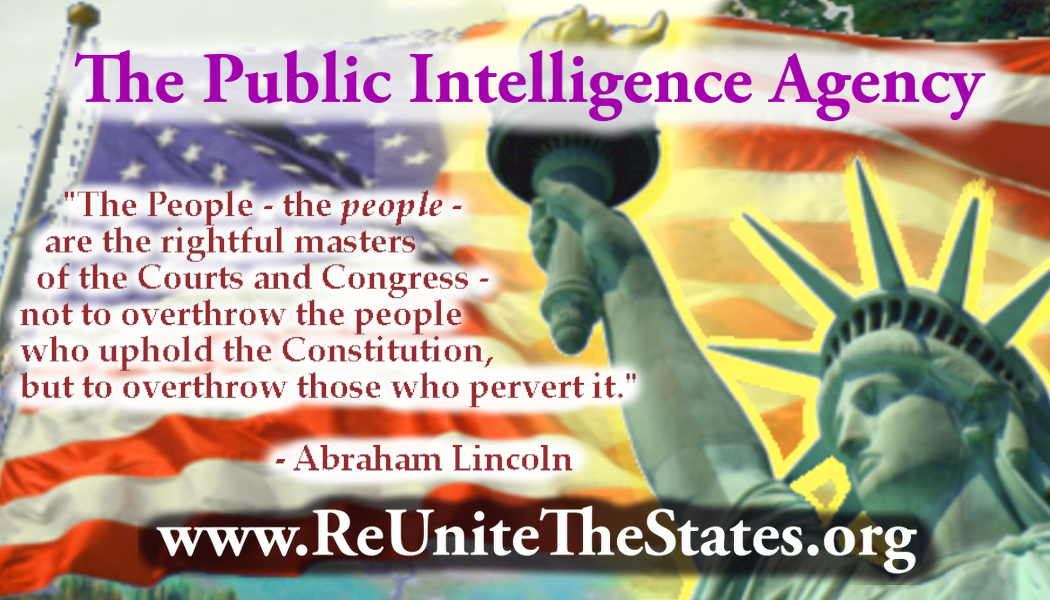
Abraham Lincoln graphic: American Luxury Gifts: https://www.amazon.com/People-Rightful-Motivational-Print-Ready-Home-Office-Patriotic-Library-Classroom/dp/B08QSL7S7Y
Â
Library of Congress. Abraham Lincoln Papers at the Library of Congress. https://web.archive.org/web/20190120213237/https://www.loc.gov/teachers/classroommaterials/connections/abraham-lincoln-papers/history3.html.
Ballantine, James Arthur and  Anderson, William S. (1969). Ballantine’s Law Dictionary with Pronunciations.
Third Edition. THE LAWYER’S CO-OPERATIVE PUBLISHING COMPANY. Library of Congress Catalog Card No. 68-30931.
Above image from American Luxury Gifts for legitimate First Amendment purposes in accordance with the U.S. Copyright Office’s Fair Use Policy and the Fair Use Doctrine.“Abraham Lincoln, [September 16-17, 1859] (Notes for Speech in Kansas and Ohio),” Page 2 (Library of Congress):
References
Allen, Karma. (2020).
Man who helped ignite George Floyd riots identified as white supremacist: Police. https://abcnews.go.com/US/man-helped-ignite-george-floyd-riots-identified-white/story?id=72051536
John Ehrenberg. (2017). What can we learn from Occupy’s failure? Palgrave Communications. https://www.nature.com/articles/palcomms201762
Occupy Conglomerate
“The 99% Declaration”, archived here via The Wayback Machine: https://web.archive.org/web/20120403043222/http://www.the99declaration.org/
“UniteThe99.org”, archived here via: https://web.archive.org/web/20120314175845/http://www.unitethe99.org/
Wall Street protesters: We’re in for the long haul Bloomberg Businessweek. Retrieved 3 October 2011.
Lessig, Lawrence (5 October 2011). “#OccupyWallSt, Then #OccupyKSt, Then #OccupyMainSt”. HuffPost. Retrieved 6 October 2011.
page in making. please check back soon. 7/11/2025
To Combat Government Corruption,
We the People must harness Our Justice System
As you’ve noticed, legal terms on this webpage are hyperlinked to their corresponding definitions, found on www.ReUniteTheStates.org. I spent many years building that website, transcribing and organizing thousands of legal term definitions using law dictionaries recommended on the pro se section on the U.S. Court of Federal Claims (aka “the People’s Court“) website, including Black’s Law Dictionary and Ballentine’s Law Dictionary. Although every courthouse across the country appears to have a self-help webpage for “pro se litigants“, or people who represent themselves in court, some of these webpages are much better than others. Others appear rather unhelpful and restrictive. Although there are a wide variety of motions you can file in court, these are rarely mentioned on courthouse websites, which instead seem to contain just a few types of cookie-cutter forms to help you get started for simple cases, but if you restrict yourselves to those, you’ll get buried by any experienced attorney.Â
So anyway, many of the self-help sections recommend Black’s Law Dictionary, named after Henry Campbell Black. Henry was educated at Trinity College in Hartford, Connecticut. He received a bachelor’s degree in 1880 and a master’s in 1887, and was admitted to practice law in 1883. But in the late 1880s, he abandoned active practice and Pennsylvania, instead pouring through books and case law to research legal term definitions, eventually compiling what would become the definitive law dictionary in the United States. The first edition was published in 1891. According to Tarlton Law Library, although First Edition was shorter than Bouvier’s law dictionary, Black’s eclipsed all competitors with the release of Second Edition in 1910. He was given an honorary doctor of laws by his alma mater Trinity College in 1917.
[paragraph to be added]
For approximately 15 years I have been diligently studying law as a form of self-defense, with a particular interest in prosecuting color of law crimes and obtaining redress for corresponding torts. Due to the fact that I am not an attorney, the two cases I’m currently working overtime on (without pay and living in a vehicle, squeaking by financially thanks to occasional donations by concerned friends who know what’s going on) were filed in propria persona, or pro se (learn more). Now, you may be reminded of the old adage, “The [person] who represents [themselves] has a fool for a client,” however:
- I’ve contacted more than 50 attorneys throughout Iowa – and some outside Iowa – and could not find representation. The cheapest quote I got was “$5000 up front, $275/hr.” which of course was far beyond what I can afford. According to a study performed by The Justice Gap in 2022, low-income Americans do not get any or enough legal help for 92% of their substantial civil legal problems;
- Legal aid organizations such as Iowa Legal Aid, Legal Aid of Story County, ISU Student Legal Services, and other free legal clinics throughout the United States are generally very limited in the types of cases they are authorized to handle; most may not assist with “fee-generating cases” because they are funded by Legal Services Corporation and therefore are subject to restrictive provisions within Title 45, Ch. XVI of the Code of Federal Regulations;
- Everybody plays the fool sometimes.
Although I am currently pursuing my law doctorate for the purpose of cause lawyering, due to extraordinary circumstances, I am essentially being “pushed out of the nest” and forced to fly or die.
clicking on the legal terms reading their definitions, and by carefully reading the statutes (sections of United States Code and case law, and using www.ReUniteTheStates.org to look up any legal terms you’re unsure of, and points in history which bring this suit into context collectively implicate, it will undoubtedly lead toward a new segment in American history wherein “liberty and justice for all” may begin to have actual meaning instead of merely being a slogan which does not align with our de facto circumstances, as it has been for far too long.
In short, this suit will lead toward large sums of money being peaceably and legally slammed out of the accounts of those who have caused and are currently attempting to cause additional harm, and instead into the accounts of those whom the defendants have harmed and/or currently appear prima facie to be actively engaged toward attempting to cause harm.Â
This is the real manifest destiny of our country – not conquest, but rather a nation of justice for all, where everyone everyone knows the law and knows exactly how to obtain redress if they were to be harmed, so much so that it is likely people simply will not attempt to harm others because (a) there will be no need to, because we are moving society from a place of scarcity to abundance very soon, and (b) because the risk for liability and possible prison time will be too high once people not only know the law, but also how to enforce their rights and the laws through the courts. This is because we’re open sourcing the justice system: in the words of Abraham Lincoln, “The People are the Rightful Masters of the Courts and Congress – not to overthrow the people who uphold the Constitution, but those who pervert it.“
A Better Plan than that of the Oppressors
The two new pieces of technology, the Wild Living Skills App™ and Gardens Across Iowa! App™ (which will be used to develop the Gardens Across America! App™ and Gardens Across Earth! App™), in context with the national plan and (replicable) state platform – as well as that which Wild Willpower PAC has behind-the-scenes has been in development for years – will soon come into view. I assure you: even those who sought or seek to cause harm will soon realize that they have more to benefit from the new plan than they did from any current insidious plan and/or agenda which might be sought by the power-hungry.Â
Above image, posted on GoodReads, is used in accordance with the Fair Use Doctrine for legitimate First Amendment purposes.
Prepare to Learn about Government, History, Law,
and Color of Law Crimes
Before we get started, here is some basic information about how the U.S. justice system is supposed to be designed, and why some of the laws I am citing in this case exist in the first place. It appears there is a severe lacking of knowledge about the law throughout society today, and based upon more than a decade of dedicated study, I think it is very important to impart this knowledge as best I can. One major reason that this is very important is that so many people who are protesting today – crying out for help as the country is in crisis – seem to not know much about the laws I tend to cite, or how to have them applied through the system.
Many believe that the government is irreparably corrupt and cannot be made just – that officials will simply choose not to enforce the laws, because “they are all corrupt”, we so often hear.Â
However, I have travelled all over this country for many years, and have talked to a lot of officers in many different states. There have been several occasions where Police Officers or County Sheriffs have been called to kick the “suspicious person” off of a property – whether it was while petitioning in front of a strip mall or flying a sign toward traffic to direct people to www.WildWillpower.org. In these experiences, I have never met an Officer who knew about any of the laws that are cited within this case, and these laws are particularly relevant to what is going on in the State of Iowa and around the country right now. They are specifically designed to hold government officials accountable, and they even authorize lower-ranked officers to arrest higher-ranked officers or officials – all the way up to the President. Now, you may be thinking, “But Trump v. United States, 603 U.S. 593 (2024) says the President has absolute immunity! We can’t do anything!” But I assure you that you and many others have merely been misled: a key difference in the case I filed on March 31, 2025 is that both the criminal charges and class action petition were filed against the “natural persons” – such as Kim Reynolds and Donald Trump – not merely against their titles or roles. Although this may seem like a minor and inconsequential thing to point out, it is actually a crucial difference in law, which you will see as we continue on.
Now let’s look as a particular set of laws which were originally designed specifically to hold natural persons who use the color (appearance) of law, in order to deprive people of their rights.
page in making. please check back soon.
You don’t need to be an 18 U.S.C. § 242 Deprivation of rights under color of law. Read it carefully, and read about the legal term “color of law“. While many people believe that the only way to obtain justice is to try to overthrow the government or vote our way out of this mess, there is another way too: utilizing the United States (federal) Courts to enforce various provisions of law within the United States Code which are specifically designed to hold government officials accountable when they pass unjust laws which are used to deprive people of their rights. Color of law codes such as 18 U.S.C. § 241 and 18 U.S.C. § 242 were passed pursuant to the Ku Klux Klan Act of 1871.
United States Codes (abbreviated U.S.C.) are generally enforced via filing a complaint with the United States District Attorney’s Office and the United States District (federal) Court, and not via the local police. Local police, however, can accept a complaint from a Citizen and then forward it to the appropriate authorities who have jurisdiction over the matter. Additionally, arrests for federal crimes can be made by local authorities if they have probable cause, so that the person in custody may be transferred to the appropriate authorities for processing.
Before we get started, here is an educational video to help you better understand how the U.S. government is designed. Although the video emphasizes the design, structure, and underlying purpose of a republic, the United States is in fact a democratic-republic. I believe that both the Democratic and Republican Parties have lost sight of this, and it we would do well to remember that the majority rule is counterbalanced by the rule of law (the republic), and that a republic without direction guided by the will of the people becomes stagnant and unable to respond to a changing and evolving world:
- Â
Request for Support while I Continue the Casework
I don’t enjoy having to ask for donations like this at all, however at this time I am unable to work because 100% of my time is dedicated to casework and school: it is overtime work with no pay. I have no choice, however, because as you will see there is far too much at stake if I don’t perform this casework: it is for my protection and the safety of others. To donate, Venmo = @Sondra-Wilson-777 or PayPal = Sondra.Wilson777@gmail.com. Â
All court documents filed thus far, alongside summaries to explain them in layman’s terms, as well as videos of me doing my best to explain, are posted below. This page will be updated frequently until everything is made clear for both the public and the Courts.
About the Student Author (and pro se litigant)
I am not a BAR Attorney and therefore, by definition, am not an “officer of the court“, nor am I engaged in what is called the “practice of law“. Rather, I am a pre-law student at Iowa State University (entrepreneurship major, music minor) whose semester at Iowa State University was sabotaged by a group of individuals who violated 18 U.S.C. § 241 Conspiracy against rights (and other federal laws) and whom I intend to hold personally liable in accordance with 42 U.S.C. § 1985 Conspiracy to interfere with civil rights. Because I have been unable to afford or find an attorney, I’ve had no choice but to handle the two cases I’m involved with by myself lest I face severe consequences caused by the criminals and tortfeasors who harmed and continue to cause harm to me.
I’ve absolutely had enough.
Backstory
For the sake of brevity, I’m leaving a lot of information out here, but this will give a pretty good overview to bring the two ongoing cases into context.
I was raised in Nevada, Iowa, and around puberty began showing intersex characteristics which I became privately very ashamed of due to the religious views and political culture I was raised into. After graduating high school in 2000 I learned that medical care existed, and ended up in the psyche ward more than once because I was mentally and emotionally going through the ringer trying to make sense, through a Christian lens, what was going on with me, and I did not feel safe expressing to anyone about what I was going through and that I wanted to seek medical help. Because of the diagnoses I received, which to this day I believe were incorrect, I strongly suspected that if I told people about this they would have wrongly believed that what I was feeling was an expression of other psychological symptoms.
So, in 2002 I gave away my possessions and began hitchhiking the country with a guitar, much like Alexander Supertramp, to try to learn to live in the wilderness and get away from society’s expectations and demands, and find out what I truly believed. If I lived a more pure life, away from media and outside influence, would these thoughts go away? Not only did I want to get in touch with my natural self, I didn’t want anything to do with war;Â inspired by songs like Imagine, Perfect Sense, the Fixin’-to-Die-Rag, Masters of War, and several others, to write protest music. Due to the political atmosphere following September 11, I seemed to be about the only person opposed to war, and concerned that it did not appear our country was even trying for peace.
In spring 2003 I had the great fortune of meeting Richard Lonewolf, who for years taught me all sorts of ethnobotanical and wilderness survival skills. These skills helped to keep me alive after I left later that year and began living on the streets of Los Angeles until 2005, where I was able to find medical support. I won’t get into it now, but there were many spiritual experiences I had during this time, but in the awake world and during dreams. I was eating mostly just raw foods at the time, practicing yoga and Qi Gong meditation (which I learned at ISU years earlier), street performing and writing songs, foraging wild plants around the city and from along Highway 1, and writing a rock & roll opera I was working on at the time (which one day I hope to finish).
In 2005 I transferred to (section in making)
n 2010 I returned to find him, a disabled U.S. Army Veteran in poor health, with almost no food in the cupboards, and not receiving his due military benefits. From that point forward I dedicated years documenting and learning alongside him, creating www.RichardLonewolf.com (because the school he founded was taken from him, long story short) and www.WildWillpower.org: a separate organization designed to help lift up and sponsor rare Native American teachers who still possessed these amazing and very important skills, because it appeared there was no organization in the country designed to do this. I knew that he couldn’t be the only one. In 2016 we finished writing a textbook called More Valuable Than Gold, which Wild Willpower PAC is currently seeking funds to get it printed via a local Ames business called Heuss Printing.
When not documenting and learning alongside Lonewolf, much of my time learning to identify and learning uses for hundreds of species of lichens and mushrooms alongside the California Lichen Society and Mycological Society of San Francisco. These experiences led to to invent and begin developing the Wild Living Skills App™; one of its functions is to help Citizens coordinate with forest officials so that we can legally harvest natural forest products via the creation of wildharvesting cooperatives.
My friend Kevin Byrd hitchhiked with me and helped keep me alive as I worked diligently to develop Wild Willpower PAC, www.RichardLonewolf.com, and lay the groundwork to build the App on www.WildLivingSkills.org. I also built www.KernRiverCoop.com so we (page in making. 4/20/2025)
My Semester at Iowa State University was Sabotaged by Criminals who Violated Federal Laws
- First by the defendants listed in the criminal complaint that was filed on March 31 with the U.S. Attorney’s Office for the Southern District of Iowa, and then with the United States (federal) District Court on April 14, and
- Second by the defendants listed (page in making, check back shortly)
The Lockwood/Reliable Street Case
Damages
restitution damages due to the fact that defendants were unjustly enriched.
page in making. please check back soon. 4/20/2025.
References
J.L. Suter, American Biographical Directories, District of Columbia: Concise Biographies of its Prominent and Representative Contemporary Citizens, and Valuable Statistical Data, 1908-1909 (Washington, D.C. : Potomac Press, 1908), 41; digital images, Google Books (http://books.google.com : accessed 5 Jan 2012).